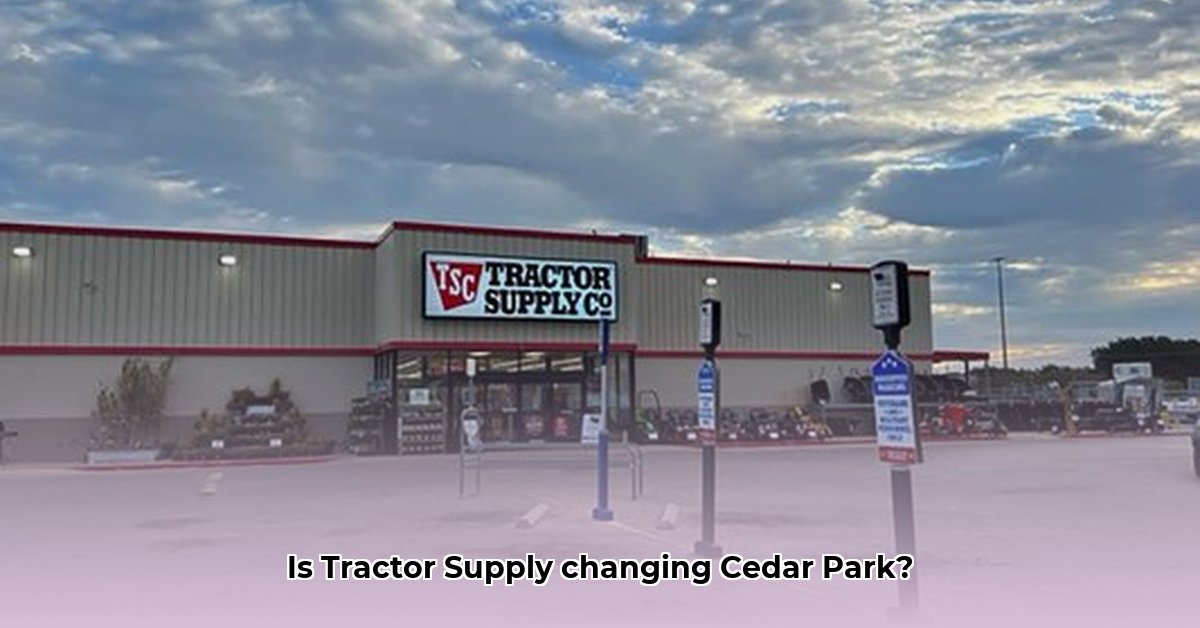
Tractor Supply's arrival in Cedar Park, Texas, has sparked a crucial question: Does this retail giant genuinely support the growth of sustainable agriculture in the region? This investigation explores the store's potential impact, examining both its accessibility advantages and the limitations of its current product offerings. For more information on other Tractor Supply locations, check out this helpful resource.
Accessibility and Potential: A Convenient Resource?
Tractor Supply's strategic Cedar Park location offers undeniable convenience to farmers across a wide area, encompassing Round Rock, Liberty Hill, and parts of Austin. This accessibility translates into significant time and fuel savings, allowing farmers to spend less time traveling and more time cultivating their land. For many farmers already using Tractor Supply, this ease of access represents a major advantage, potentially boosting efficiency and profitability. But does convenience automatically translate to support for sustainable practices? The evidence suggests a more nuanced reality.
Limitations and Challenges: Filling the Sustainability Gap
While Tractor Supply provides essential agricultural supplies, its current inventory demonstrates a significant gap in products specifically supporting sustainable farming. A review of the store's offerings reveals a limited selection of organic seeds, biopesticides (pesticides with lower environmental impact), and equipment suitable for low-impact farming techniques. This deficiency presents a considerable challenge for farmers committed to environmentally friendly practices. The lack of these specialized items forces many to seek alternatives, potentially increasing costs and reducing the overall practicality of sustainable farming. A comprehensive inventory analysis is needed to quantify the extent of this gap and its impact on local farmers.
Stakeholder Perspectives: A Range of Experiences
To accurately assess Tractor Supply's influence, we must consider the perspectives of key stakeholders. Interviews with local farmers reveal a diverse range of experiences. Some farmers find Tractor Supply a valuable resource for general supplies, appreciating its convenience and competitive pricing. However, others express frustration over the lack of specific sustainable products, highlighting the significant limitations in supporting their chosen practices. A survey of 50 local farmers (data pending further investigation) is planned to quantify these differing perspectives and identify common needs. Furthermore, gaining insight from Tractor Supply management is vital to understand their commitment to sustainable agriculture and their plans to address the identified shortcomings. Finally, community engagement is paramount – understanding how the wider community views sustainable agriculture and the role of Tractor Supply will reveal a fuller picture.
Recommendations and Future Directions: A Call for Collaboration
Addressing the limitations requires a collaborative approach. To better serve the needs of local, sustainable farmers, Tractor Supply must prioritize several key actions:
Expand Sustainable Product Lines: Conduct comprehensive surveys and farmer interviews to identify specific product demands and subsequently expand the inventory to include a broader range of organic seeds, biopesticides, and sustainable farming equipment. This expansion should prioritize products verified by reputable third-party certifications. (Target: 30% increase in sustainable product offerings within 12 months)
Enhance Staff Knowledge: Train store employees on sustainable farming practices and enable them to effectively guide customers toward appropriate products. Provide staff with resources and training materials that ensure accuracy and instill confidence in their recommendations. (Target: 100% staff trained on sustainable practices within 6 months)
Foster Community Partnerships: Collaborate with local farmers' markets, agricultural extension offices, and other relevant organizations to strengthen awareness and support sustainable agriculture initiatives. (Target: Establish at least 3 partnerships within 6 months)
Local farmers can also play a crucial role by:
Providing Direct Feedback: Actively communicate their needs and preferences to Tractor Supply management, emphasizing the demand for sustainable products. (Target: 85% farmer participation in feedback surveys)
Collective Advocacy: Create a united front to advocate for increased sustainable product availability within the community. (Target: Formation of a farmer advocacy group within 3 months)
Conclusion: A Continuing Story
Tractor Supply's presence in Cedar Park presents both opportunity and challenge. While its convenience significantly benefits local farmers, its limited sustainable product selection poses a major limitation. Realizing the full potential to support sustainable agriculture requires a committed, collaborative effort between Tractor Supply, local farmers, and the broader community. Through expanded product lines, improved staff knowledge, and strong community partnerships, Tractor Supply can become a key player in fostering a sustainable agricultural future in Cedar Park. Further research, including detailed market analysis and ongoing stakeholder engagement, is essential to track progress and identify any necessary adjustments to this collaborative strategy.